01The invitation begins with Jesus
He calls us to Himself.
What does it mean when Jesus says, “Follow me”?
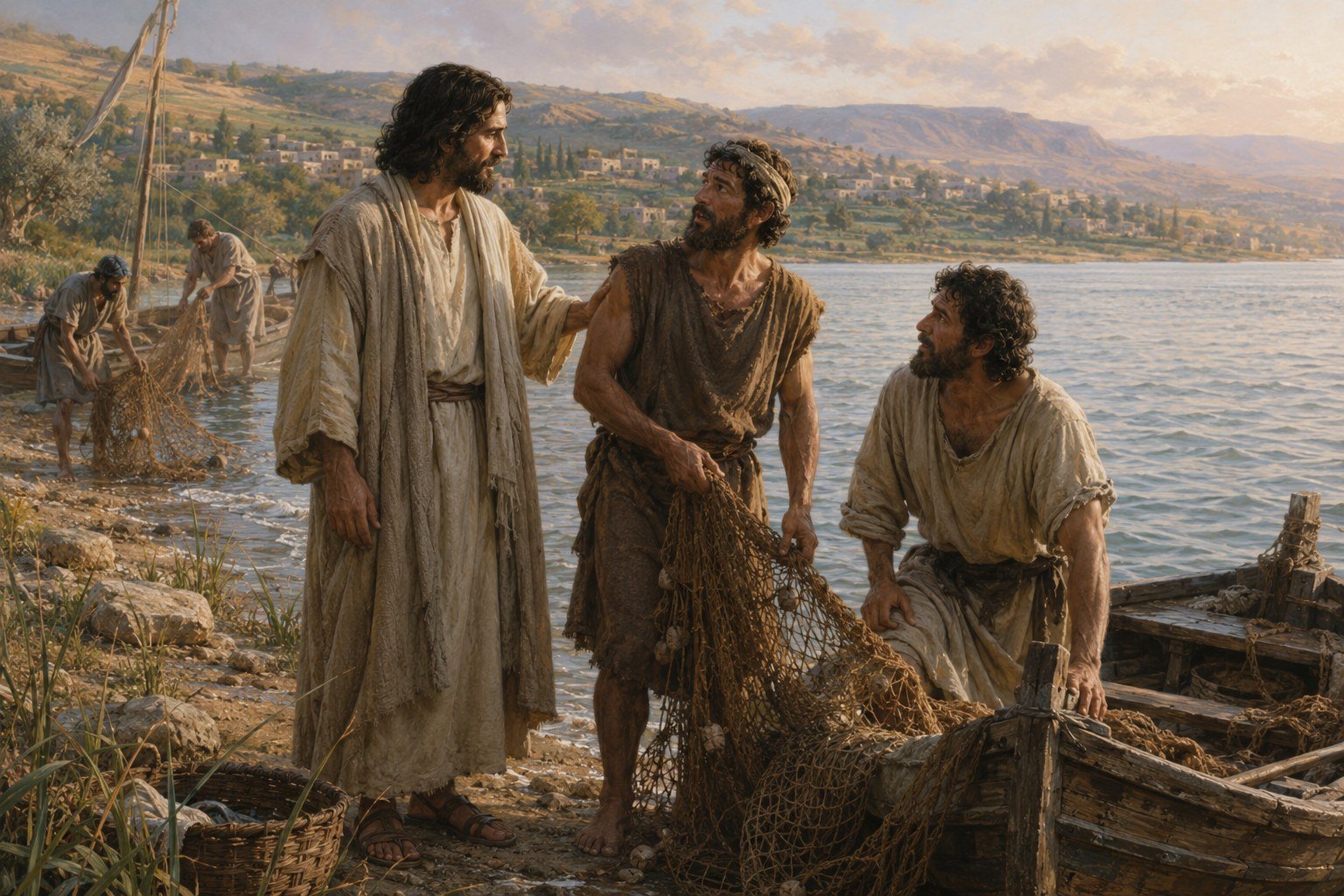
Jesus did not begin by handing fishermen a moral programme. He called them to walk with Him—to listen, watch, trust and gradually discover who stood before them.
Their response reordered work, security and loyalty, but grace spoke first. Jesus called ordinary and compromised people before they had repaired themselves.
Following Him is therefore personal and comprehensive: attachment to His person, acceptance of His authority and movement into His loving purpose.
Examine the Scripture
Matthew 4:18–22; 9:9–13 · Mark 1:14–20 · Luke 5:1–32; 9:57–62 · John 1:35–51; 21:15–22
02Known by the Shepherd
More than knowing about Him.
Can religious activity exist without relationship?
Knowing about Jesus
Facts may be accurate while the heart remains distant.
Working in His name
Religious achievement cannot replace belonging to Him.
Known by Jesus
His sheep hear His voice, trust Him and follow.
Some of Scripture’s most sobering words are spoken to people who call Jesus “Lord” and appeal to remarkable works: “I never knew you.” Jesus exposes the danger of substituting religious activity for obedient relationship.
Eternal life is knowing the Father and Jesus Christ whom He sent. Biblical knowing is personal, covenantal and responsive. It includes truth, trust, fellowship and the direction of a life.
Obedience is not a substitute for relationship. Nor is relationship an excuse to ignore Jesus. It is the living root from which obedience grows.
Examine the Scripture
Matthew 7:13–29 · John 10:1–30; 17:1–26 · Philippians 3:1–16 · 1 John 1:1–2:6
03Prayer, Scripture and the Spirit
Relationship becomes a daily life.
How do we walk with Someone we cannot yet see?

Receive His apostolic word in Scripture.
Come honestly to the Father in prayer.
Walk in the presence and power of the Spirit.
Practise the truth Jesus has shown.
Jesus is known through the true apostolic gospel, not through an imagined Christ of our own making. The Spirit makes that public truth living and personal—glorifying Jesus, bringing His words to remembrance and assuring believers of adoption.
Prayer is not a performance for gaining attention. It is the speech of children to their Father: worship, dependence, confession, intercession and honest need.
Inner impressions must never replace Scripture. The Shepherd’s voice is recognised above all in His words, and every claimed leading must agree with His character and bear holy fruit.
Examine the Scripture
Matthew 6:5–15 · Luke 11:1–13 · John 10:1–30; 14:15–27; 16:5–15 · Romans 8:9–27 · 2 Timothy 3:14–17
04The branch lives by the Vine
“Remain in me.”
Where does the life of a disciple come from?
A branch does not manufacture life through effort. It bears fruit because it remains joined to the vine. Jesus chose this image to describe the dependent centre of discipleship.
Abiding is not vague spiritual awareness. His words remain in us; prayer becomes aligned with His purpose; obedience keeps us in the experience of His love; His joy takes root.
The Christian life is not maintained by independent determination. The branch lives by remaining in the Vine.
The command to bear fruit is first an invitation to receive life.
Read Jesus’ teaching on abiding
John 6:47–69; 8:30–36; 15:1–17 · Colossians 2:6–15 · 1 John 2:18–28; 3:18–24
05Grace forms Christlike fruit
We become like the One we behold.
How does relationship change a human life?
Received by grace
The mind renewed
Led by the Spirit
Christ formed in us
His character made visible
Grace does not only pardon the past; it trains the present. The Spirit turns believers toward Jesus, renews their thinking and produces a family likeness that will one day be complete.
Transformation is neither instant perfection nor passive inevitability. Believers put off the old life and practise the new because God is already at work within them.
Failure does not make grace irrelevant. Confession brings sin into the light, where Christ’s advocacy and cleansing restore the repentant disciple to honest fellowship.
Examine the Scripture
Romans 8:1–17; 12:1–2 · 2 Corinthians 3:12–18 · Galatians 5:13–26 · Ephesians 4:17–5:2 · Philippians 2:12–13 · Titus 2:11–14 · 1 John 1:5–2:2
06Love takes obedient form
The way of the Cross.
If acceptance is free, why does obedience matter?
Jesus, not the ego, becomes Lord.
Faithfulness may cost comfort, status or safety.
Greatness bends low for another’s good.
Grace teaches us to say no to what destroys love.
“If you love me, you will keep my commandments” is not a bargain by which obedience purchases love. It is love taking concrete form.
Self-denial is not self-hatred, the erasure of personality or permission for abuse. Jesus restores human dignity while dethroning self-rule. The cross-shaped life refuses domination and learns costly service.
Good works are not the root of acceptance. They are its living fruit—prepared by God for people already recreated in Christ.
Examine the Scripture
Mark 8:27–38; 10:35–45 · John 13:1–17; 14:15–24 · Ephesians 2:8–10 · Philippians 2:1–18 · James 1:19–27
07His life moves outward
Christlike love has a neighbour.
What happens when Jesus begins forming us into His likeness?
Jesus’ love is not admiration from a safe distance. It washes feet, welcomes the overlooked, tells the truth, forgives enemies and gives itself for another’s good.
The church is not a private audience for individual spirituality. It is the household in which patience, correction, mercy, gifts and mutual dependence become visible.
Love does not require pretending that evil is harmless. Biblical forgiveness refuses revenge while truth, justice, safety and wise boundaries remain meaningful.
Examine the Scripture
Matthew 5:43–48; 18:15–35; 22:34–40 · John 13:1–35; 15:9–17 · Romans 12:9–21 · 1 Corinthians 12–13 · Ephesians 4:1–5:2 · 1 John 3–4
08Commandment into Commission
Love cannot keep Christ to itself.
Why does knowing Jesus lead us toward other people?
Love God.
Receive His love with the whole person.
Love people.
Seek their true and lasting good.
Make disciples.
Help people know and follow Jesus.
The Great Commandment and Great Commission are not competing agendas. Love for God produces love for people. Love for people desires their reconciliation with the One in whom life is found.
The risen Jesus sends His followers with His authority, His presence and His Spirit. Mission is never the recruitment programme of an institution. It is participation in the loving purpose of Christ.
We do not share Jesus because we are forced to. We share Jesus because we have come to know the One who changed our lives.
Examine the Scripture
Deuteronomy 6:4–9 · Leviticus 19:9–18 · Matthew 22:34–40; 28:16–20 · John 13:34–35; 20:19–23 · Acts 1:1–8 · 2 Corinthians 5:14–21
09Making disciples, not statistics
Help another person walk with Him.
What did Jesus actually commission His followers to make?
The gospel of Jesus
Repentant faith
Baptism and community
Everything Jesus taught
Faithful multiplication
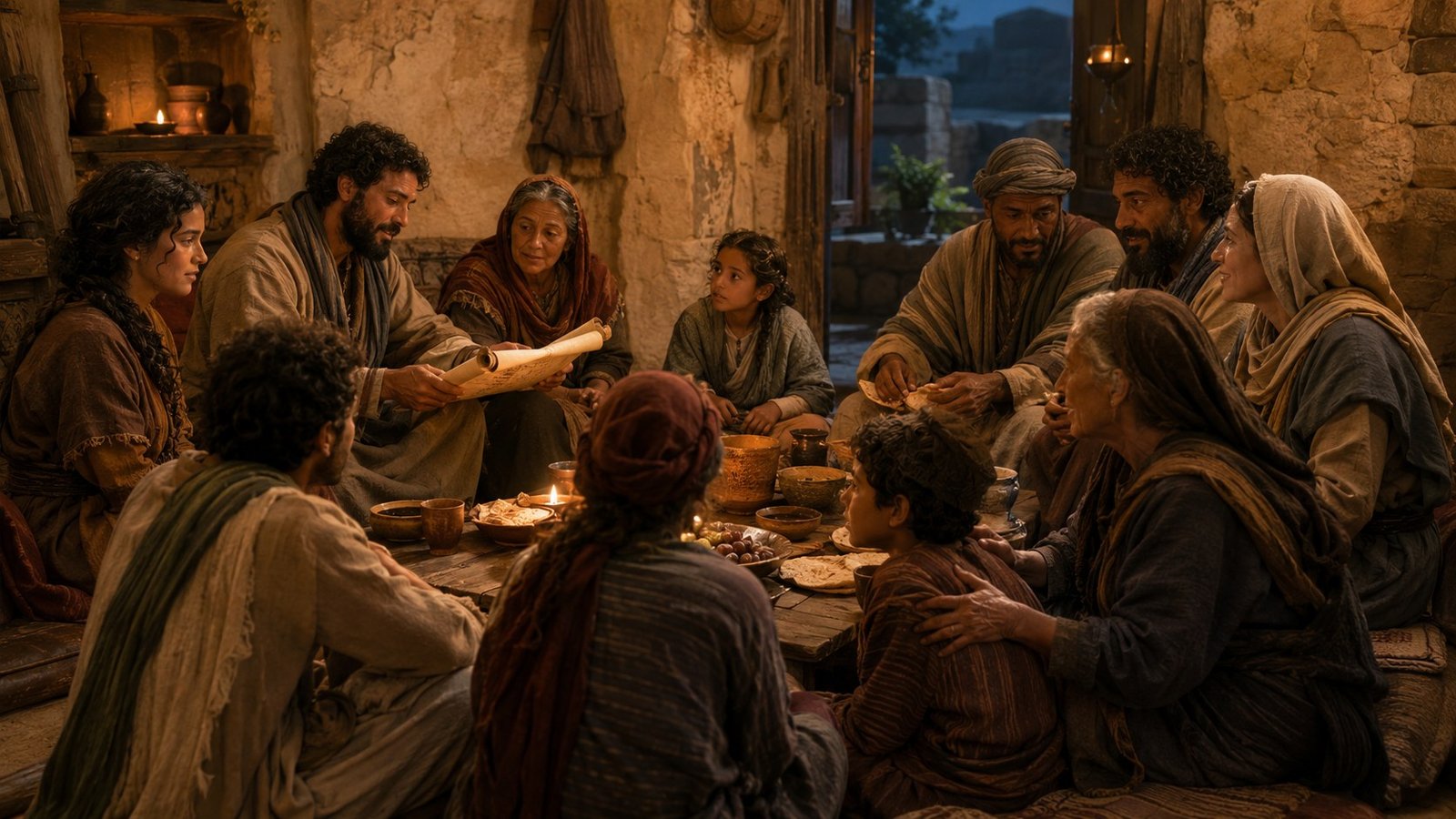
A convert is not a statistic. The Commission seeks people learning to live with Jesus under His gracious authority: baptized, taught, gathered, corrected, encouraged and gradually formed toward maturity.
Some preach publicly. Others answer questions, open homes, teach children, serve quietly or walk patiently beside one person. Gifts differ; the shared calling is to make Christ visible with truth and love.
We plant and water. God gives growth. That truth frees witness from pressure, exaggeration and manipulation.
Examine the Scripture
Matthew 28:16–20 · Acts 2:37–47; 8:26–40 · Romans 10:8–17 · 1 Corinthians 3:5–9 · Colossians 1:24–29; 4:2–6 · 2 Timothy 2:1–2 · 1 Peter 3:13–17
10Faithful hope
Until we see Him face to face.
How do disciples continue through failure, suffering and delay?
The Shepherd keeps
The disciple remains
Grace meets failure
Hope outlasts trial
Faith becomes sight
The New Testament joins strong promises with real commands. Jesus keeps His sheep, and His sheep continue hearing and following. God works through Scripture, prayer, warning, encouragement and the fellowship of His people.
Perseverance is not pretending never to fail. Peter denied Jesus and was restored by Jesus. The repentant disciple does not run from the Shepherd but returns to Him.
The destination of discipleship is not spiritual self-improvement. It is Christ Himself: resurrection, restored creation and the joy of seeing the One we have learned to love.
Examine the Scripture
John 10:27–30; 15:1–17; 21:15–22 · Philippians 1:6; 3:7–16 · Hebrews 3:6–14; 10:19–39; 12:1–3 · Jude 20–25 · Revelation 21–22