
01Movement 1
Creation and the first hope
Can our broken story have a new beginning?

The Bible begins with God giving life. The world is His good creation, and human beings are made to bear His image. We are meant to know Him, care for what He has made and live with one another in love. Before there is a promise of rescue, there is something good to lose.
Where one man fails, another obeys.
Adam and Eve turn from the God who gave them life. Trust gives way to hiding; blame enters their relationship, and death shadows their future. The story is painfully familiar. We, too, know the distance between the good we were made for and the lives we actually live.
Paul returns to Adam when he explains Jesus. Adam’s disobedience brings sin and death into the human story; Christ’s obedience opens the way to righteousness and life. Paul calls Adam a pattern of the One to come, but the comparison depends on a profound difference. Jesus obeys where Adam fails. His grace exceeds the ruin.
Jesus is therefore more than another teacher offering advice from inside our predicament. Paul calls Him the last Adam: the beginning of a renewed humanity. The hope He brings reaches as far as resurrection. Those who belong to Him will share His life.
Evil will not have the last word.
Even in the judgment of Genesis 3, the story does not end with the serpent’s success. God speaks of hostility between the serpent and the woman, and between their offspring. There will be conflict and injury, but the serpent’s head will be struck.
Read on its own, this is not a detailed account of the cross. Read through the completed Christian Scriptures, it opens a horizon that becomes clearer: Jesus breaks the devil’s power, the ancient serpent is finally defeated, and God’s people share in His victory. The promise begins quietly. The rest of Scripture teaches us how large that hope is.
Abel, Noah and the limits of a comparison
Hebrews contrasts Jesus’ blood with Abel’s: Jesus speaks a better word. Abel’s murder matters, but it is not an atoning sacrifice. Peter also connects Noah’s deliverance through judgment with baptism and grounds salvation in Jesus’ resurrection. The direct counterpart he names is baptism, not an assertion that every feature of the ark is Jesus.
These are real New Testament connections with specific boundaries. The Baptism Journey explores Peter’s wording more fully.
02Movement 2
Promise and provision
How will blessing reach a wounded world?

God calls Abraham to leave the familiar and trust Him. He promises a family, a land and blessing for the families of the earth. Abraham cannot yet see how it will happen. His story teaches us to look first at the faithfulness of the One who promises.
A promise wide enough for the nations.
Abraham believes God. His descendants will carry this promise through generations of wandering, failure and hope. Their history matters in its own right; these are God’s dealings with Israel, not disposable scenery for a later story.
Paul says that the blessing promised to Abraham reaches the nations through Jesus Christ. Those who trust Christ belong to Him and share in the promised blessing. The good news does not begin with an unexpected change of divine purpose. In Jesus, God brings His ancient promise into the lives of people from every nation.
Look CloserOne offspring, a family of blessing
זֶרַע
zeraʿ · Greek: sperma (σπέρμα)
Seed or offspring
The word can speak of one descendant or many. Genesis uses it for a numerous family; Paul himself uses the singular word for all who belong to Christ in Galatians 3:29.
When Paul focuses the promise on Christ, his argument is not that a singular noun can only mean one person. Jesus is the One in whom the family’s blessing reaches its goal, and those who belong to Him share in it. Context supplies the connection; grammar alone does not prove it.
Read the NET translation notes (opens in a new tab)A king who is also a priest.
On Abraham’s journey, Melchizedek appears as king of Salem and priest of God Most High. He blesses Abraham, who gives him a tenth. The scene is brief, but it joins two roles that will matter deeply: ruling and bringing people before God.
Hebrews returns to this priest-king when explaining Jesus’ lasting priesthood. Jesus does not hold His office through descent from Levi. His risen life does not end, so His care for those who come to God through Him does not pass to a successor. Melchizedek helps us understand the likeness. Hebrews does not require us to identify him as Jesus appearing in disguise.
God Himself provides.
Then comes Abraham’s terrible test. Isaac is the beloved son through whom the promise is to continue, yet Abraham is asked to offer him. Genesis tells us this is a test; it ends with God stopping the killing and providing a ram in Isaac’s place. The son lives because God provides.
Hebrews explains Abraham’s trust: he reckoned that God could raise the dead, and he received Isaac back figuratively. Paul’s account of God not sparing His own Son also recalls this scene. Here the difference matters. Isaac is spared. Jesus willingly goes through death and rises again.
The connection rests in the beloved son, costly trust, God’s provision and life beyond apparent loss. We do not need to invent Isaac’s age, make the thicket a prediction of a crown of thorns, or claim the mountain was the exact site of the crucifixion. What Scripture gives us is already searching and profound.
Is Isaac a prediction or a pattern?
Hebrews explicitly speaks of Abraham’s confidence in resurrection and Isaac’s figurative recovery. The broader connection between Isaac and Jesus is a strongly supported pattern, not an explicit claim that every feature of Genesis 22 predicts the passion.
The earlier son is spared through a provided sacrifice; God does not spare His own Son, who actually dies and rises. The similarity and the difference belong together. Genesis gives no exact age for Isaac, and the later connection between Moriah and the temple does not establish the precise site of Golgotha.
Heaven opened to us.
Jacob, fleeing from home, dreams of a stairway with angels ascending and descending. God meets him and renews the family promise. Centuries later, Jesus draws on that scene and speaks of angels ascending and descending upon the Son of Man. The meeting of heaven and earth comes into focus in Him. Our access to God is personal: it centres on Jesus.
The rejected brother who preserves life.
Joseph’s brothers sell him, yet God brings good through the evil done to him. The rejected brother becomes the one who preserves the family during famine. Joseph’s forgiveness makes reunion possible.
Stephen retells this history before describing the rejection of Jesus, the Righteous One. A recurring pattern emerges: people reject the deliverer God sends, and God vindicates him. This is a strong connection across the story, although Stephen never calls every detail of Joseph’s life a prediction of Jesus. Rejection, preservation and reconciliation carry the weight.
03Movement 3
Deliverance and life in the wilderness
Who can rescue us, and sustain the life He gives?
Israel’s rescue begins under the weight of slavery. God hears, confronts Pharaoh and brings His people out. Their freedom is a gift they could not win for themselves. It will become one of Scripture’s great ways of speaking about salvation.
Sheltered on the night of Passover.
At the first Passover, each household follows God’s instruction concerning the lamb, the meal and the blood at the doorway. Judgment falls on Egypt; God spares His people and brings them out. Israel will remember this rescue with worship, a meal and a story told to its children.
Paul makes the Christian connection directly: Christ, our Passover, has been sacrificed. Jesus’ death is the saving centre of a new deliverance. John also records that His bones were not broken, language that recalls the Passover instructions as well as the righteous sufferer’s preservation.
Paul then asks what a delivered community should become. The unleavened bread becomes an image of sincerity and truth: leave behind the malice that corrupts shared life. We do not make ourselves good enough to purchase rescue. Because Christ has given Himself for us, we are called to live honestly and love one another. Deliverance gives our lives a new direction.
The Son follows Israel’s road.
God calls Israel His firstborn son and brings the people out of Egypt. Much later, Hosea remembers that love while grieving the people’s unfaithfulness. His words originally look back to the Exodus.
Matthew applies that son-language to Jesus returning from Egypt. He is not treating Hosea as a detached travel prediction. Jesus enters Israel’s story as the faithful Son. And at the transfiguration, Luke describes the departure Jesus will accomplish at Jerusalem with the word exodus. The rescue toward which His life moves passes through His death, resurrection and return to the Father.
This makes the old story more than an inspiring account of escape. It helps us recognize the scope of Jesus’ mission. He leads people out of bondage to sin and into life with God. The saving initiative remains God’s, and the appropriate response remains trust.
Bread for people who cannot feed themselves.
Freedom does not make the wilderness easy. Hungry people discover their daily dependence as God gives manna. They must receive what He supplies rather than pretend they can sustain themselves.
When the crowd asks Jesus about manna, He directs them to the true bread from heaven and identifies Himself as the bread of life. The earlier bread sustained mortal lives. Jesus gives life that death will not finally take away. The sign leads us to the giver: come to Him, believe in Him, receive the life He gives.
Water on the way.
God also gives water to thirsty people. Paul looks back on the wilderness and identifies the spiritual rock with Christ. The One Christians now know as Lord was not absent from God’s earlier care.
Paul’s purpose includes a warning. Receiving gifts did not make Israel’s idolatry harmless. We should neither reduce these events to clever symbols nor assume that outward participation makes trust and obedience unnecessary. The living Christ calls us to depend on Him.
04Movement 4
God dwelling among His people
How can we come near to a holy God?
The God who brings Israel out of slavery also gives a place of meeting. The tabernacle stands among the tents. His presence is a gift; His holiness is real. The sanctuary teaches both truths together.
He comes to dwell among us.
God commands a sanctuary so that He may dwell among His people. Later, the temple continues that story, although Solomon knows no building can contain the God of heaven. The building matters because of the One who chooses to meet His people there.
John says that the Word becomes flesh and dwells among us. God’s presence comes into human life in Jesus. When Jesus speaks of raising the temple, John explains that He means His body. His death and resurrection bring the language of dwelling and access into an astonishingly personal form.
The sanctuary therefore leads us toward Christ, but not through secret meanings assigned to every colour and measurement. John and Hebrews provide the connection: God’s presence, the place of meeting and the way of drawing near are fulfilled in the Son.
A priest who gives Himself.
Israel’s priests represent the people before God. Sacrifices belong to the covenant’s life of worship and cleansing, but the offerings recur and the priests themselves need mercy. The repetition keeps the need before the people.
Hebrews presents Jesus as the sinless high priest who shares our humanity and understands our weakness. He offers Himself. He is both the One who brings us near and the One whose self-giving deals decisively with our sin.
His sacrifice does not need to be repeated by another priest when He dies. He lives. Christians are invited to approach God with confidence because their hope rests in His completed offering and continuing priesthood.
The way into God’s presence.
On the Day of Atonement, the high priest enters the inner sanctuary with blood. The annual rite deals with sin and uncleanness among the people and in the sanctuary; the sending away of a goat vividly portrays removal. Access is solemn and restricted.
Hebrews sets this repeated entrance beside Jesus’ decisive self-offering and His appearance before God for us. The earlier ceremony points beyond itself. Christ has accomplished His atoning work, and He will appear again to bring salvation to those awaiting Him. Future hope does not mean His sacrifice remains unfinished.
Once for all, with salvation still to come
The annual rite dealt with sin and uncleanness among the people and in the sanctuary. A simple word gloss such as cover does not explain every use of the Hebrew atonement language. Nor does Hebrews explicitly assign a separate identity in Christ to every action involving the two goats.
Hebrews contrasts repeated offerings with Jesus’ decisive self-offering. His work has been accomplished, and He will appear again for those awaiting Him. The future completion of our salvation does not postpone His atonement to a future autumn feast.
The calendar points beyond itself.
Israel’s appointed times gave a rhythm to remembrance, rest, gratitude and worship. The New Testament returns to this calendar. Paul calls sacred-calendar observances a shadow and directs us to Christ, while warning against judging people over their observance. Together they help us see deliverance, new life, the Spirit, cleansing and God’s presence.
At the beginning of harvest, Israel brought its first produce to God. Paul calls the risen Jesus the firstfruits of those who have died. His resurrection is not an isolated escape from death. It is the beginning of the life His people will share when He comes. The harvest image is clear even where the exact relationship between resurrection day and the ancient sheaf offering is debated.
At Pentecost, a feast associated with harvest, the promised Spirit is poured out. Peter explains that the exalted Jesus has given what the crowd sees and hears. People from many places hear the good news; believers begin sharing a life of teaching, prayer and fellowship. The feast setting enriches the story, but Acts places the emphasis on Jesus and the Spirit. It does not identify the two festival loaves as two ethnic groups or require every later custom to have been present that day.
These connections overlap. They are not seven boxes in a dated timetable. Hebrews already relates the autumn Day of Atonement to Christ’s accomplished sacrifice. Scripture also speaks of a trumpet when Christ raises and gathers His people, but it does not name the Feast of Trumpets as the date of His return. We can trust the promised gathering without claiming to know its day.
Look CloserThe beginning of the harvest
ἀπαρχή
aparchē
First portion; firstfruits
Firstfruits are the beginning of a harvest. Paul calls the risen Jesus the firstfruits of those who have died, then speaks of those who belong to Him being raised at His coming. His resurrection begins the life His people will share.
The image is clear even where interpreters differ about the precise date of the ancient sheaf offering. The word explains the relationship between Christ’s resurrection and ours. It does not independently determine a ceremonial date.
Look CloserA sound is not a date
תְּרוּעָה · שׁוֹפָר
teruʿah · shofar
A shout or sounding blast; a horn
The first word describes a sound; the second identifies an instrument. Scripture uses such sounds for assembly, alarm and worship. Neither word means rapture.
The New Testament speaks of a trumpet when Christ raises and gathers His people. That hope is clear. It does not follow that every trumpet passage names the Feast of Trumpets or tells us the date of His coming. Scripture also places trumpets in other settings, including the Jubilee announcement on the Day of Atonement.
Look, and live.
Later in the wilderness, the people face death after rebelling. God tells Moses to lift up a bronze serpent. Those who look as God has commanded live. The unusual sign is effective because of God’s provision, not because bronze has saving power.
Jesus explicitly compares that lifting up with His own. The Son of Man must be lifted up so that those who believe may have eternal life. In John, the language leads toward the cross and His exaltation. Jesus bears our sin; He does not become morally sinful. The point is life received by trusting God’s appointed rescue.
A voice we must hear.
Before Israel enters the land, Moses speaks of a prophet like himself whom the people must hear. God will not leave them to find guidance through the surrounding nations’ forbidden practices.
Peter applies that promise to Jesus. The earlier mediator points toward the One who makes God known and calls us to respond. Seeing the pattern is not the end of the encounter. It brings us to a practical question: will we listen to Him?
Joshua and the rest still ahead
Joshua brings Israel into the promised land, yet a later psalm still calls the people to hear God’s voice and enter His rest. Hebrews reasons from that later invitation that Joshua’s rest was not the final fulfillment. God’s people are still summoned to faithful trust.
This joins creation’s rest, Israel’s story and Christian hope without turning Joshua’s battles into a coded account of the cross or an instruction for Christian coercion.
05Movement 5
The king and the songs of hope
What kind of King can carry our hope?
Israel’s monarchy gives the story a royal shape. A king can protect and lead, yet even a great king can fail. Scripture lets us see both the gift of David’s calling and the need for a ruler whose faithfulness will last.
A throne that will endure.
David wants to build a house for God. God instead promises to establish David’s house: a royal line with an enduring kingdom. The promise has a real place in Israel’s history, including Solomon and the kings who follow.
Their failures do not make God’s faithfulness meaningless. They deepen the question of how His promise will stand. When Gabriel announces Jesus’ birth, he speaks of David’s throne and a kingdom without end. Acts identifies Jesus as the promised descendant. The royal hope comes to rest in Him.
This King is not merely one more claimant to political power. His reign is bound to His saving work. The songs of Israel help us recognize both His suffering and His vindication.
Not abandoned to the grave.
Psalm 16 sings of trust in the God who will not abandon His faithful one to the realm of death. It belongs first to Israel’s prayer and worship, where the hope of life is grounded in God’s presence.
Peter and Paul read it in the light of Jesus’ resurrection. David died and was buried; Jesus was raised and did not see decay. Their argument is explicit. The risen Christ brings the psalm’s hope into a fullness that David’s own earthly life could not contain.
A cry of anguish becomes praise.
Psalm 22 begins with the cry of someone who feels forsaken. Enemies mock, suffering overwhelms, and clothing is divided. Yet the lament opens into praise, worship and hope reaching the nations.
Jesus takes its opening words on His lips at the cross. The Gospel accounts echo its mockery and explicitly connect the division of His garments with the psalm. Hebrews also hears Christ in its promise to declare God’s name among His brothers and sisters.
These connections do not depend on pretending that every line has an undisputed text. The familiar wording about pierced hands and feet has a real translation and manuscript question. The clear Gospel connections remain clear. We can hear the whole movement from suffering to vindication without making one disputed phrase carry everything.
Look CloserWhy do translations differ here?
כָּאֲרִי
kaʾari · Greek: ōryxan (ὤρυξαν)
Like a lion; the Greek wording means “they dug”
At Psalm 22:16 in English numbering, the traditional Hebrew wording reads like a lion in a difficult phrase about hands and feet. The ancient Greek reads they dug; other textual evidence contributes to the discussion behind translations such as pierced.
This is a real question about the transmitted text, not a discovery of a secret meaning. The New Testament does not quote this particular line. Its explicit connections with Jesus’ cry, mockery, divided garments and later praise remain strong without treating the disputed wording as settled proof of nail wounds.
The King at God’s right hand.
Psalm 110 joins royal authority with priesthood after the order of Melchizedek. The king is invited to sit at God’s right hand, and the priesthood rests on God’s oath.
Jesus invokes this psalm; Peter applies it to His exaltation, and Hebrews develops its priestly promise. The One who reigns is the One who brings us to God. Kingship and mercy are not competing parts of His character. In Him the royal and priestly hopes meet.
The stone the builders rejected.
Psalm 118 celebrates God’s reversal: the rejected stone becomes the cornerstone. Jesus and the apostles apply that image directly to Him. Human rejection does not cancel God’s purpose. The crucified Jesus becomes the foundation of hope, and the question is whether we will trust Him.
The Psalms say more than one thing
Psalm 2 contributes royal sonship and opposition; Acts and Hebrews apply it to Jesus. Psalm 8 celebrates humanity’s calling, and Hebrews directs us to Jesus, humbled through suffering and crowned with glory. These connections broaden the picture beyond suffering alone.
Hebrews uses the ancient Greek form of Psalm 40, a body prepared, where the Hebrew speaks of ears dug or opened. Its argument concerns Jesus’ embodied obedience; a translation difference should not be hidden. Psalm 69 supplies language of costly faithfulness, but applying a passage to Jesus does not mean every statement in the original speaker’s life describes Him.
06Movement 6
Prophetic hope amid failure
Can the One who suffers also be the One who saves?
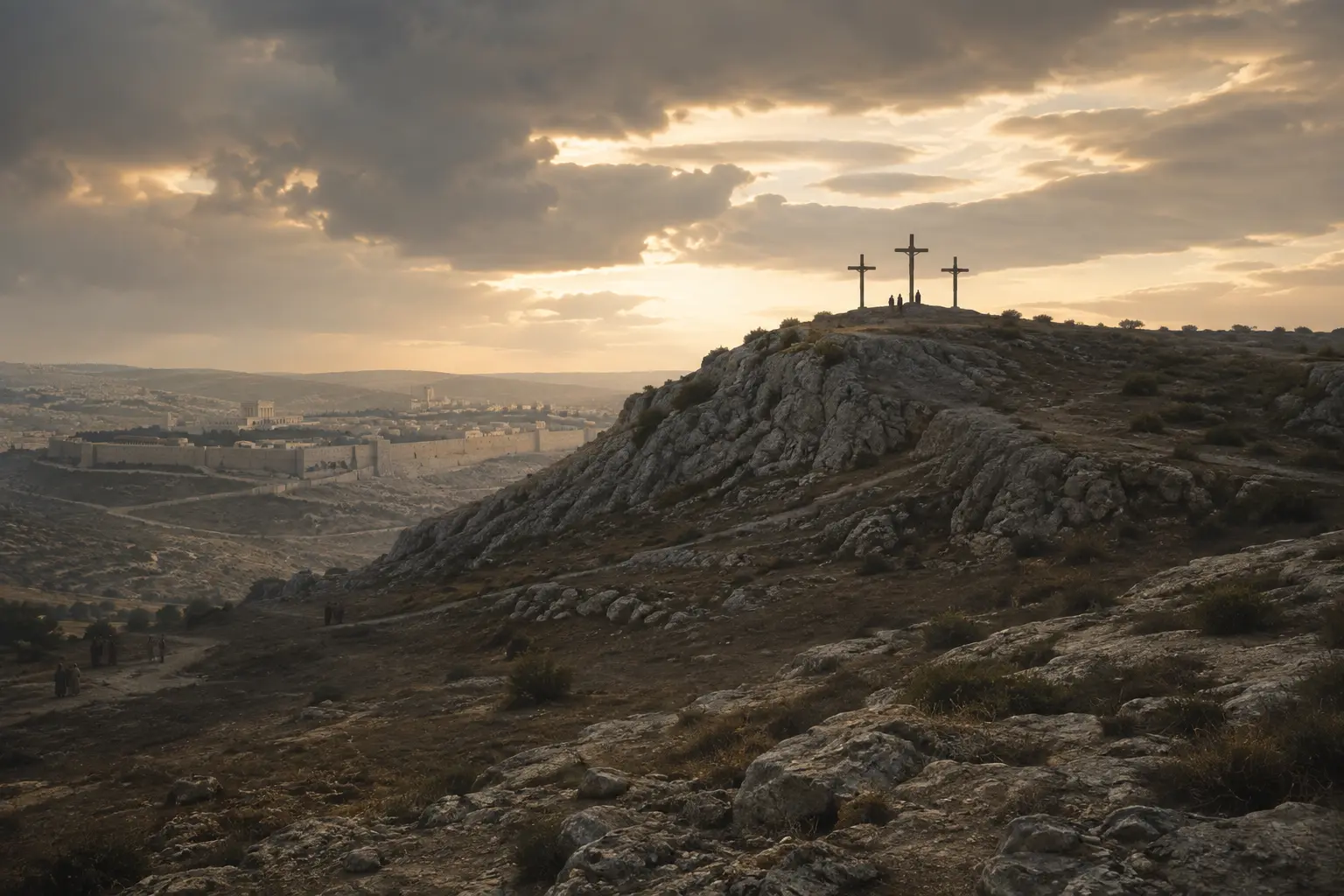
The prophets do not speak from a world at peace. They confront injustice and unbelief while announcing God’s faithfulness. Their words address their own people, and the New Testament teaches us to see their fuller reach in Jesus.
The sign of Jonah.
Jonah descends into a death-like crisis in the sea and is delivered. Sent again to Nineveh, he brings a warning to people who repent. The story also exposes the prophet’s reluctance to welcome God’s mercy toward others.
Jesus compares Jonah’s time in the fish with His own burial and invokes the Ninevites’ response. Someone greater than Jonah stands before His hearers. The comparison does not require us to say Jonah literally died and rose. It does call us to respond to the One who truly will rise from death.
God with us.
Isaiah’s sign of Immanuel is given during a crisis facing King Ahaz. It has an immediate setting in Judah’s fear and God’s word to that king. Matthew later applies the passage explicitly to Jesus’ virgin conception.
The Christian claim rests on Matthew’s account and interpretation, not on saying the Hebrew word for the young woman can only mean virgin. The relationship between the earlier sign and its fullness in Jesus deserves care. Matthew’s conclusion is clear: in this child, God is with us.
Look CloserIsaiah’s word and Matthew’s account
עַלְמָה
ʿalmah · Greek: parthenos (παρθένος)
Young woman; virgin in Matthew’s context
The Hebrew word describes a young woman of marriageable age. It does not, by itself, explicitly assert virginity. The ancient Greek translation uses parthenos, the word Matthew also uses.
Matthew’s own narrative clearly describes conception before Mary and Joseph come together, through the Holy Spirit. That account and Matthew’s explicit application establish the Christian claim. We can affirm it without overstating the Hebrew word or erasing the sign’s original setting in Ahaz’s crisis.
Read the NET translation notes (opens in a new tab)Light reaches Galilee.
Isaiah speaks of light for people in darkness and of a royal child associated with David’s throne and peace. Matthew explicitly connects the Galilee light passage with Jesus beginning His ministry there. The wider royal hope belongs with that picture, although Matthew does not quote every line about the child as a separate fulfillment.
Life from a fallen royal tree.
A shoot grows from Jesse’s stump: Isaiah pictures a ruler endowed with God’s Spirit, judging justly and bringing a peace the present world lacks. Paul quotes the nations’ hope in this root of Jesse as hope in Christ. The apparent collapse of the royal house does not exhaust God’s promise.
A ruler from Bethlehem.
Micah looks toward Bethlehem for a ruler who will shepherd God’s people. The small place associated with David matters within the promise of restored leadership. Strength and care belong together in the portrait.
Matthew quotes the Bethlehem passage when telling of Jesus’ birth. The connection is direct, but the point is larger than locating a town on a map. The child born there is the shepherd-ruler. God’s answer comes through an apparently small beginning.
The Servant who bears our sins.
Isaiah’s servant passages develop a mission of justice, restoration and light for the nations. Elsewhere Israel is called God’s servant; within these passages, the servant also has a mission toward Israel. We should hear that complexity before rushing to a single verse.
The portrait reaches its most searching form in Isaiah 52–53. The servant is rejected and suffers unjustly. He bears the sins of others, gives his life, and is vindicated. His suffering is bound to the healing and peace of people who have gone astray.
The New Testament identifies Jesus here plainly. Matthew connects His gentle ministry with the servant. Jesus applies the words about being counted with transgressors to Himself. Philip begins with Isaiah’s suffering servant and tells the Ethiopian traveller the good news about Jesus. Peter describes Jesus bearing our sins and bringing straying people back to their Shepherd.
This is central to the whole Journey. The King saves through self-giving love. Jesus is innocent, yet He gives Himself for sinners. His resurrection vindicates Him; His mercy opens the way for us to return to God. We do not have to turn every earlier resemblance into a prediction to recognize this strong, explicit witness.
Nor should we claim that all Jewish readers before Jesus expected the same suffering Messiah. Interpretations differed. The Christian reading is grounded in what Jesus and His apostles say, and can be explained without dismissing the people whose Scriptures we are reading.
Good news spoken in His own voice.
Isaiah also announces good news, liberty and comfort through an anointed herald. In Nazareth, Jesus reads this passage and announces its fulfillment in the hearing of His neighbours. The promised hope is no longer only being described. The One who brings it is speaking to them.
07Movement 7
Covenant renewal and an enduring kingdom
What can survive exile, failure and death?
Jerusalem’s loss and the experience of exile make the question urgent. Has failure brought God’s purpose to an end? Into that setting come promises of forgiveness, gathering and a kingdom that violent empires cannot finally overcome.
Forgiveness written into a new covenant.
Jeremiah promises a new covenant with Israel and Judah. God will put His law within His people, they will know Him, and He will forgive their wrongdoing. The problem reaches the heart; so does the promised renewal.
At His last meal with the disciples, Jesus identifies the cup with the new covenant in His blood. Hebrews quotes Jeremiah and explains Christ’s mediation. The promise becomes inseparable from His self-offering. Forgiveness is not God pretending that sin never mattered. It is His gift through the One who gives Himself for us.
For an ordinary reader, the hope is deeply personal. God does not offer only another opportunity to manage appearances. He offers mercy and a life that grows from knowing Him. The full questions about Israel, the nations and future fulfillment deserve careful study; the central promise of forgiveness through Christ is not left uncertain.
One Shepherd for a scattered flock.
Ezekiel condemns shepherds who feed themselves while neglecting the flock. God promises to seek His sheep Himself and set one shepherd, His servant David, over them.
Jesus’ good-shepherd teaching gathers these themes: He knows, seeks, gathers and lays down His life for the sheep. John does not attach a formal quotation from Ezekiel, so this is a strong connection across the story rather than an explicit fulfillment formula. It helps us recognize the kind of care the promised King brings.
A human figure receives the kingdom.
Daniel sees brutal kingdoms pictured as beasts. Then one like a son of man, a human figure, comes with the clouds to the Ancient of Days and receives lasting dominion. The vision also speaks of the holy ones receiving the kingdom: the figure and the people belong together in its meaning.
At His hearing, Jesus invokes the cloud-coming Son of Man alongside the language of sitting at God’s right hand. He places His own identity within this vision of authority and vindication. The condemned One will not remain at the mercy of His judges.
In Daniel’s scene, the figure approaches the Ancient of Days. It should not be drawn as though the passage simply depicts a descent to earth. Jesus’ application and the wider New Testament give us grounds for hope in His reign and return without erasing the vision’s own movement.
Look CloserHuman, among the beasts
כְּבַר אֱנָשׁ
kebar ʾenash
Like a human being; like a son of man
This is Aramaic, the language of this part of Daniel. The human figure contrasts with the beast-like kingdoms. He approaches the Ancient of Days and receives dominion. The vision’s explanation also speaks of the holy ones receiving the kingdom.
Jesus invokes this cloud-coming figure at His hearing, together with Psalm 110. His application is explicit. The wording helps us see both His authority and the people who share in His kingdom; it does not require us to flatten every detail into a single picture of the return to earth.
A hope reaching beyond the return from exile.
In Daniel 9, Daniel prays over Jerusalem’s sin and desolation. The answer speaks of seventy sevens and reaches beyond rebuilding: transgression is to be brought to an end, sin dealt with, iniquity atoned for and everlasting righteousness brought in. An anointed one is cut off, and the city faces further devastation.
Within the completed Christian canon, there are strong grounds for seeing Jesus’ atoning work and lasting righteousness as the ultimate fulfillment of that hope. This is more substantial than an interesting resemblance. Christ deals with the deeper problem Daniel’s prayer exposes.
That conclusion does not settle every historical identification or calculation. Some read the anointed figures through the restoration and the crisis surrounding Onias III and Antiochus IV; others identify the cut-off anointed one with Jesus. An immediate historical horizon and an ultimate fulfillment in Christ can coexist. Some chronological models reach broadly into Jesus’ era, but a uniquely demonstrated prediction of His triumphal entry on an exact day is not established.
Look CloserWhat does “anointed one” establish?
מָשִׁיחַ
mashiaḥ
An anointed one
The word can describe a person appointed for an office, including a king or priest. English capitalization as Messiah is already an interpretive choice. The title alone neither proves nor rules out Jesus.
Daniel 9 also requires decisions about the seven and sixty-two sevens, the figures mentioned and the historical setting. The traditional Hebrew accents separate the periods in verse 25; many Christian translations connect them. The anointed one’s being cut off speaks of a grave loss, but does not by itself state that this death atones for others.
The stronger Christian case takes in the whole passage’s movement toward dealing with sin and everlasting righteousness, then reads it alongside Christ’s work. That canonical conclusion should remain distinct from the disputed identification and timetable.
Daniel’s sevens: what can the chronology show?
Sixty-nine sevens can be read as 483 years. That arithmetic is straightforward; choosing the beginning, calendar, segmentation and endpoint is not. Different proposals should be tested separately.
| Proposed beginning | What follows |
|---|---|
| Cyrus, 538/537 BC | An ordinary 483-year count reaches about 55/54 BC. This does not reach Jesus’ ministry. |
| Darius, 520/519 BC | An ordinary count reaches about 37/36 BC. This also falls before Jesus’ ministry. |
| Artaxerxes and Ezra, 458/457 BC | An ordinary count reaches about AD 26/27, broadly within the period of Jesus’ ministry. Whether this authorization is the intended word to restore Jerusalem remains disputed. |
| Artaxerxes and Nehemiah, 445/444 BC | Ordinary solar years reach about AD 39/40. Models using 360-day years seek an endpoint in the period of Jesus’ death, but require additional disputed choices. |
These approximate calculations account for the absence of a year zero. The models do not all interpret the text’s seven, sixty-two and final seven in the same way. A broad correspondence with Jesus’ era is possible, especially with an Ezra starting point, but is not proof that the text supplies a unique calendar calculation.
The famous 173,880 days come from multiplying 69 × 7 × 360. That does not establish that every prophetic year here must have 360 days, the precise decree day, or an undisputed triumphal-entry date. Nehemiah gives a month, not the decree’s day. The exact-day claim remains unproven even while the wider Messianic reading remains viable.
The Onias III and Antiochus IV reading takes the second-century crisis seriously: an anointed high priest is killed, worship is disrupted and desolation follows. Its chronology and its account of the passage’s comprehensive hope remain debated. A Christian reading can recognize an immediate historical horizon while seeing the ultimate resolution of sin and righteousness in Christ. No New Testament passage explicitly identifies Daniel 9’s cut-off figure as Jesus.
A future seventieth week is part of a dispensational premillennial reading that coordinates Daniel with other end-time passages. Daniel does not explicitly state a long gap between the sixty-ninth and seventieth weeks. The identity of the covenant-maker in verse 27 and the relation of its events to Christ, Jerusalem’s destruction or a final crisis remain disputed. This Journey does not make that system a condition of recognizing Christ’s fulfillment.
Compare the historical reading in the NABRE notes · Compare the future-week interpretation
08Movement 8
The coming King and the Gospel fulfillment
Who stands at the centre of the whole story?
The promises converge without becoming a collection of interchangeable predictions. Each text has its own setting and contribution. Together they prepare us to recognize a King whose humility, suffering and victory belong to one saving mission.
The King comes humbly.
Zechariah tells Zion to rejoice: her king comes righteous and humble, riding on a donkey. His reign reaches toward peace among the nations. The manner of His coming is part of His character.
Matthew and John explicitly connect Jesus’ entry into Jerusalem with this promise. He receives a royal welcome, yet He comes toward the cross. The King’s humility is not a temporary disguise for indifference to human need. It is the form of His self-giving mission.
Piercing, mourning and cleansing.
Zechariah joins the sight of a pierced figure with deep mourning, and then speaks of a fountain opened for cleansing from sin and uncleanness. The wording has a difficult shift between looking to me and mourning for him, which translations handle differently.
After recording the spear wound in Jesus’ side, John quotes the pierced-one passage. Here the Gospel connection is explicit. Revelation also carries its mourning language into the hope of Christ’s appearing. The text calls for repentance and recognition, not collective blame against later Jewish people.
What about the thirty pieces of silver?
Matthew connects Judas’s money and the purchased field with prophetic fulfillment. His wording closely resembles Zechariah 11, yet he attributes the citation to Jeremiah. Jeremiah’s potter and field passages are part of the discussion about how the texts are being brought together.
This is a genuine interpretive difficulty. Several explanations have been proposed; no single explanation should be passed off as uncontested. The central account of rejection is clear without concealing the citation’s complexity.
The Shepherd is struck, but the story continues.
Jesus applies Zechariah’s struck-shepherd saying to His approaching suffering and His disciples’ scattering. He knows their failure before it happens. Yet He also promises to go before them after He has risen. Their fear is real; His faithfulness will gather them again.
God’s home with His people.
The Feast of Booths remembered Israel’s dependence in the wilderness and celebrated God’s provision. Zechariah pictures nations coming to worship the King and keep this feast. In John’s account of the feast, Jesus invites the thirsty to come to Him and drink; John explains the promise in relation to the Spirit.
Follow that thread to Revelation: God dwells with His people, and death and sorrow pass away. This is a strong whole-Bible pattern of presence, water and life. Not every detail is explicitly called a fulfillment of Booths, and it gives us no date for Jesus’ birth or return. It brings the earlier sanctuary hope toward its destination: life with God.
The messenger makes way for the Lord.
Malachi promises a messenger preparing the way, while Isaiah has spoken of a voice in the wilderness. The Gospels bring these streams together in John the Baptist. He calls people to repent and directs their attention to the One coming after him.
Now the story crosses into the Gospel. Jesus comes among His people, announces God’s kingdom, gives His life for sinners and rises from the dead. The promised blessing, faithful Son, bread of life, priest, King and suffering Servant are not competing saviours. They help us understand the richness of the one Lord.