01The question beneath the timeline
Why does the future frighten us?
What if prophecy was meant to steady us rather than terrify us?
Will Christians go through the Tribulation?
How will I know what is true?
What if I am not prepared?
Can I face the future without fear?
The debate matters because Scripture matters, suffering matters and Jesus’ return matters. Yet it becomes spiritually dangerous when a timeline grows more important than the Lord whose coming it describes.
In the New Testament, prophecy is never given merely to satisfy curiosity. Paul comforts grieving Christians. Peter answers scoffers by calling believers to holiness. Revelation strengthens suffering churches to remain faithful to the Lamb.
The first command of Jesus’ discourse is not work out the date. It is: do not be deceived. Do not be alarmed. Bear witness. Endure.
Examine the Scripture
Matthew 24:1–14 · Acts 1:6–11 · 1 Thessalonians 4:13–5:11 · 2 Peter 3:8–14
02The words of Jesus
The disciples asked when.
What did Jesus choose to emphasize?
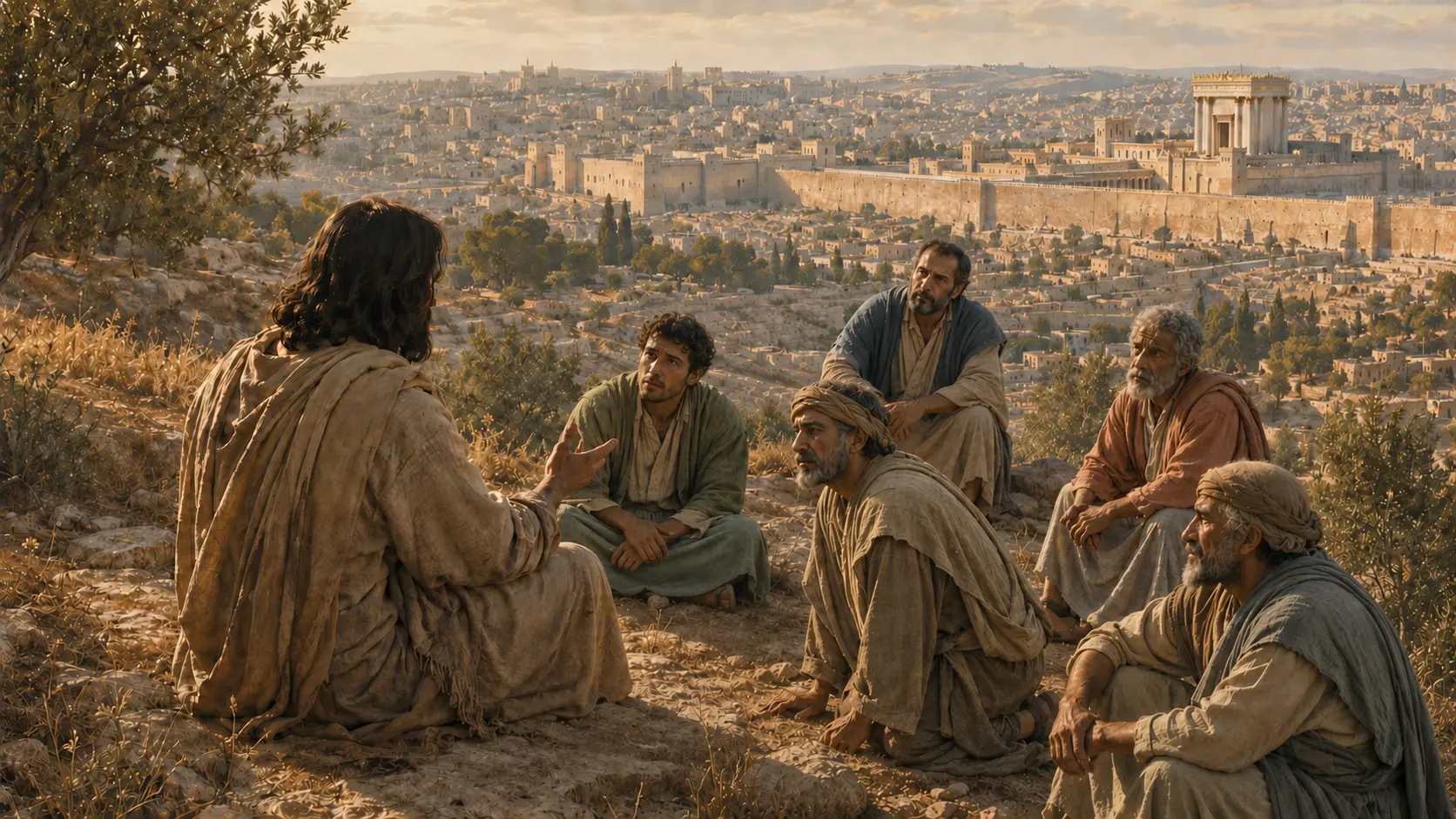
When Jesus foretells the temple’s destruction, His disciples ask when these things will happen and what sign will accompany His coming. The question is legitimate. Jesus answers it—but His imperatives tell us what He considers most important.
Wars, earthquakes and disturbances are not permission to announce that the end has arrived. His followers should expect opposition, refuse false messiahs, receive wisdom for witness and continue in love when lawlessness increases.
His coming will not depend on rumour or secret human knowledge. It will be unmistakable. Yet the exact day and hour remain with the Father, which makes watchfulness a way of life rather than a calculation.
Jesus gives more clarity about how His people must live than about the precise relationship of every end-time event.
Examine the Scripture
Matthew 24 · Mark 13 · Luke 21 · Acts 1:6–11
03Words that must not be blurred
Not every darkness is the same.
What does Scripture mean by tribulation, persecution and wrath?
Tribulation
Pressure, affliction or distress. Christians experience it in the present age; it is not limited to one final period.
John 16:33 · Acts 14:22Extraordinary distress
Jesus and Revelation use this language for exceptional suffering. Its near and final horizons require careful context.
Matthew 24:21 · Revelation 7:14God’s wrath
God’s holy judicial opposition to sin. Those justified through Jesus are securely saved from it.
Romans 5:9 · 1 Thessalonians 5:9Divine intervention
Darkness for rebellion, deliverance for those who call on the Lord, and finally judgment and renewal.
Joel 2 · 2 Peter 3Believers are saved from God’s wrath.
Followers of Jesus may suffer persecution and tribulation.
When final wrath begins within the prophetic sequence.
Whether Christ preserves by prior removal, protection through trial or rescue at His appearing.
Examine the Scripture
John 16:33 · Romans 5:3–9; 8:35–39 · 1 Thessalonians 1:9–10; 5:9 · Revelation 6–7; 13–14
04The timing debate
Three sincere readings.
Why have faithful Christians reached different conclusions?
Gathered before the final period
Pre-tribulationism emphasizes exemption from wrath, Revelation 3:10, continual expectancy and distinctions between Israel and the church.
Its strengthIt takes promises of deliverance seriously and sustains readiness for Christ at any time.
It must explainWhy removal is required rather than protection, and why Christ’s coming and gathering should be divided into stages not directly stated in the key passages.
Gathered before final wrath
Mid-tribulation and pre-wrath readings distinguish persecution by evil from judgment by God and place the gathering between them.
Its strengthIt honours the repeated half-week periods and the real difference between tribulation and wrath.
It must explainWhere wrath begins and whether Paul’s “last trumpet” is the same event as Revelation’s seventh trumpet.
Gathered at the visible coming
Post-tribulationism understands resurrection, gathering and Christ’s visible return as one climactic coming after final tribulation.
Its strengthIt follows the most direct textual sequences and requires fewer unannounced stages.
It must explainHow believers are preserved from divine wrath and how unexpectedness operates after identifiable signs.
None of these labels appears in Scripture. Each is a synthesis. Orthodoxy rests in the promised return of Jesus—not in one placement on a chart.
Examine the Scripture
Daniel 7, 9, 12 · Matthew 24:29–31 · 1 Thessalonians 4:13–5:11 · 2 Thessalonians 2:1–8 · Revelation 3:10; 6–7; 11–14
05The parables of readiness
After the prophecy, Jesus told stories.
What does readiness actually look like?
Faithful service
The faithful servant cares for those entrusted to him. Delay reveals character; it never excuses cruelty or neglect.
Prepared hearts
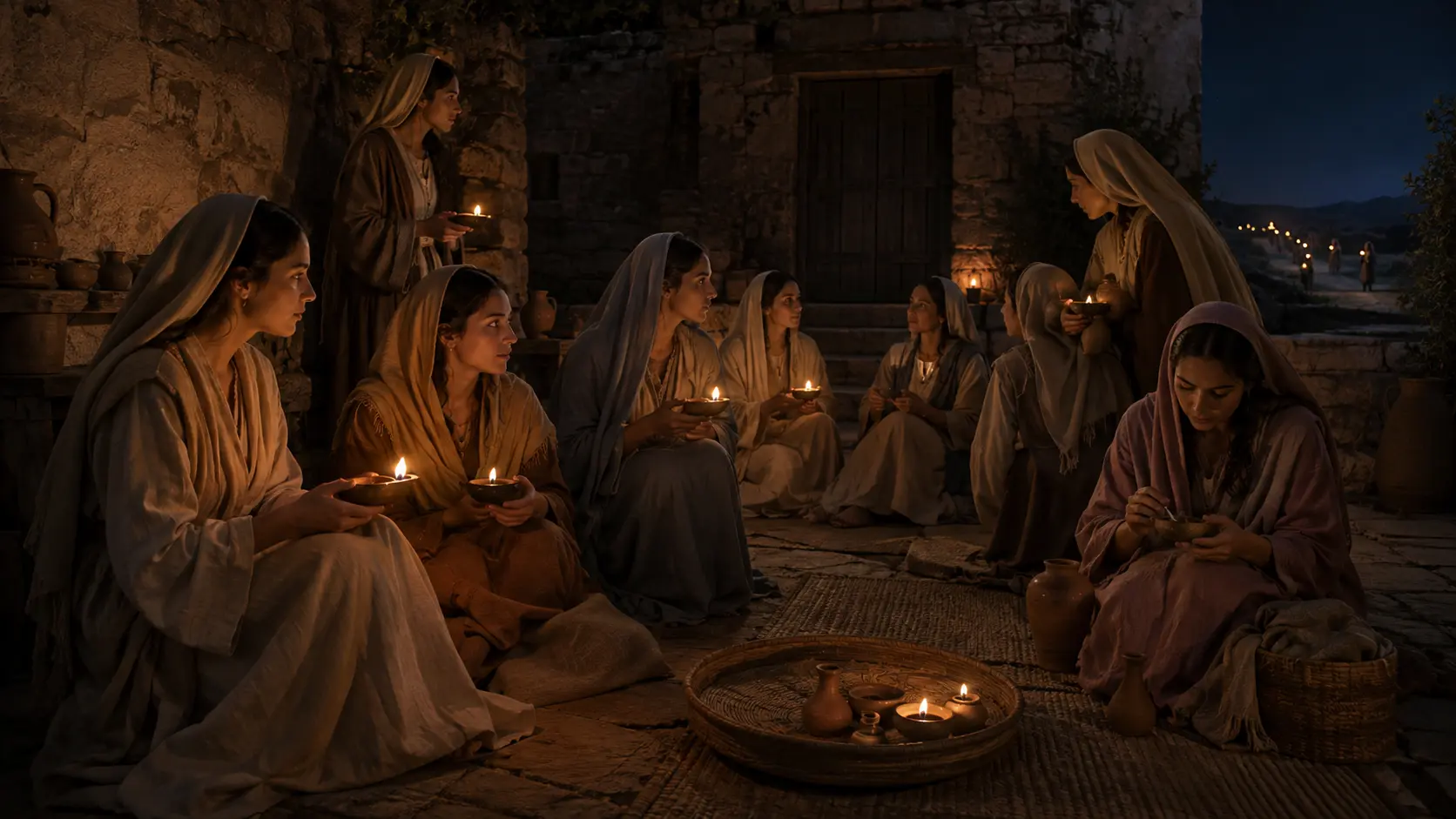
All grow drowsy. The difference is not perfect alertness but preparation when the Bridegroom arrives.
Active stewardship
Waiting is not inactivity. The Master expects His gifts and opportunities to be used faithfully.
Concrete mercy
Allegiance to the King becomes visible in love, hospitality, compassion and service.
The person who can defend a timeline but mistreats the household has missed Jesus’ conclusion.
Examine the Scripture
Matthew 24:45–51 · Matthew 25:1–46 · Luke 12:35–48; 19:11–27
06Weighing the evidence
What best explains the texts?
Can we reach a conclusion without turning it into a weapon?
Limited oppression, Son of Man, resurrection
Tribulation, visible coming, gathering
Resurrection, gathering, lawless one, Day
Endurance, wrath, Lamb’s victory
“Immediately after the tribulation”
The ordinary sequence is tribulation, cosmic signs, visible coming and gathering of the elect. Restricting “elect” to another group is possible within a system but is not supplied by the immediate paragraph.
Coming and gathering after identifiable opposition
Paul names Christ’s coming and our gathering, then says rebellion and the lawless one’s unveiling precede the Day. Jesus destroys him at His appearing.
One uninterrupted movement
Paul moves from resurrection and gathering into the Day of the Lord without announcing a gap, joining comfort, salvation, judgment and watchfulness.
Examine the Scripture
Matthew 24:29–31 · 1 Thessalonians 1:10; 4:13–5:11 · 2 Thessalonians 1:5–10; 2:1–8 · Revelation 3:10; 4–19
07Shared Christian hope
More certain than the timeline.
What does Scripture make absolutely clear?
- 01
Jesus Christ will return personally and truly.
- 02
His final appearing will be glorious and publicly consequential.
- 03
No one knows the day or hour.
- 04
The gospel must be proclaimed among the nations.
- 05
Perseverance, holiness, love and faithful service matter.
- 06
Jesus will judge with justice, raise His people and make all things new.
- 07
Christ wins. No empire, beast, deception, suffering or death can overturn His kingdom.
Examine the Scripture
Acts 1:9–11 · John 5:25–29 · Matthew 24:36–44 · Titus 2:11–14 · Revelation 19–22
08The practical question
How shall we live while we wait?
If Jesus returned today, what would matter most?
Refuse deception and spiritual sleep.
Care for what the Master entrusted.
Hold to Christ under pressure.
Put off darkness and put on Christ.
Encourage one another as the Day approaches.
A pre-tribulation believer should be ready to meet Christ at any time—and ready to suffer faithfully if an assumption about timing is wrong. Hope in rescue must not become complacency.
A mid-tribulation or pre-wrath believer should not postpone obedience until a prophetic marker. No sign becomes permission to delay readiness.
A post-tribulation believer should be prepared to endure without idolizing suffering. Expectation of hardship must never become fear, survivalism or pride.
If Jesus returned today, would the timing of the Tribulation matter as much as whether we were faithfully following Him?
Examine the Scripture
Matthew 24:42–51 · Romans 13:8–14 · Hebrews 10:19–39 · James 5:7–11 · Revelation 2–3