01A lamp in the darkness
Why did God give prophecy?
Was it given to satisfy curiosity—or to form a faithful people?
God rules history.
No empire, crisis or unseen power escapes His throne.
Evil will be judged.
Prophecy calls people away from false worship before judgment arrives.
Faithfulness matters.
Suffering churches are shown the Lamb's victory so they can endure.
Jesus is coming.
The future is not an event to decode but a King to welcome.
Biblical prophecy unveils reality from God's point of view. It declares His purpose, exposes counterfeit power, warns the unrepentant and comforts those who suffer for faithfulness.
Its blessing is repeatedly tied to hearing and obeying. Revelation was sent to seven real churches facing compromise, seduction and pressure—not to give later readers permission to turn every headline into a code.
Prophecy's proper fruit is repentance, worship, endurance, holiness, witness and hope. When it produces arrogance, panic or endless speculation, it has been read against its pastoral purpose.
Examine the Scripture
Deuteronomy 29:29 · Isaiah 46:8–11 · John 13:19; 14:29 · 2 Peter 1:16–21 · Revelation 1:1–3; 19:10; 22:6–7
02The story begins before Revelation
The first promise was spoken in a garden.
What if the end of the Bible is the healing of its beginning?
God with humanity
Serpent, sin and curse
The offspring will conquer
The Lamb defeats by sacrifice
God with humanity forever
Genesis gives the final visions their vocabulary: image, rule, serpent, tree, river, life, death, curse and divine presence. Revelation does not abandon that world. It brings its wounded story to completion.
The promised offspring of the woman becomes the royal Messiah. The serpent becomes the dragon. Human rebellion grows from Babel into Babylon. Yet the Lamb conquers, the accuser falls and the nations are healed.
This outer frame corrects a common mistake. Christian hope is not permanent disembodied escape. It is resurrection, renewed creation and unbroken communion with God through Jesus Christ.
Examine the Scripture
Genesis 1–3; 10–12 · Psalm 8 · Romans 8:18–25; 16:20 · 1 Corinthians 15:20–28 · Revelation 12; 20–22
03Kingdom, Day and restoration
The prophets saw one horizon from many mountains.
What had Scripture already made visible before Bethlehem?
A son of David rules the nations with justice.
Psalm 2 · Isaiah 9 · 11The LORD confronts evil and becomes King over all.
Joel 2–3 · Zechariah 14He receives an everlasting kingdom after beastly empires fall.
Daniel 7The sleeping dead awake to everlasting destinies.
Isaiah 26 · Daniel 12Death, curse and tears give way to life with God.
Isaiah 25 · 65–66The Day of the LORD can describe near historical judgment and the ultimate intervention of God. Prophecy often places nearer mountains and the final horizon in one field of vision. Context must decide where fulfilment begins and whether it is exhausted.
Daniel reveals kingdoms as beasts because empire dehumanizes when it rejects God. The answer is not a stronger beast. It is the human Son of Man, receiving authority from the Ancient of Days and sharing His kingdom with the saints.
Isaiah, Ezekiel, Daniel, Joel and Zechariah give Revelation its world: throne, scroll, living creatures, beasts, witnesses, plagues, Babylon, Gog, resurrection, temple-city, river and universal kingship.
Examine the Scripture
Psalm 2; 72; 96–98; 110 · Isaiah 2; 9; 11; 24–27; 60–66 · Ezekiel 34–39; 40–48 · Daniel 2; 7–12 · Joel 2–3 · Zechariah 9–14
04The King explains His return
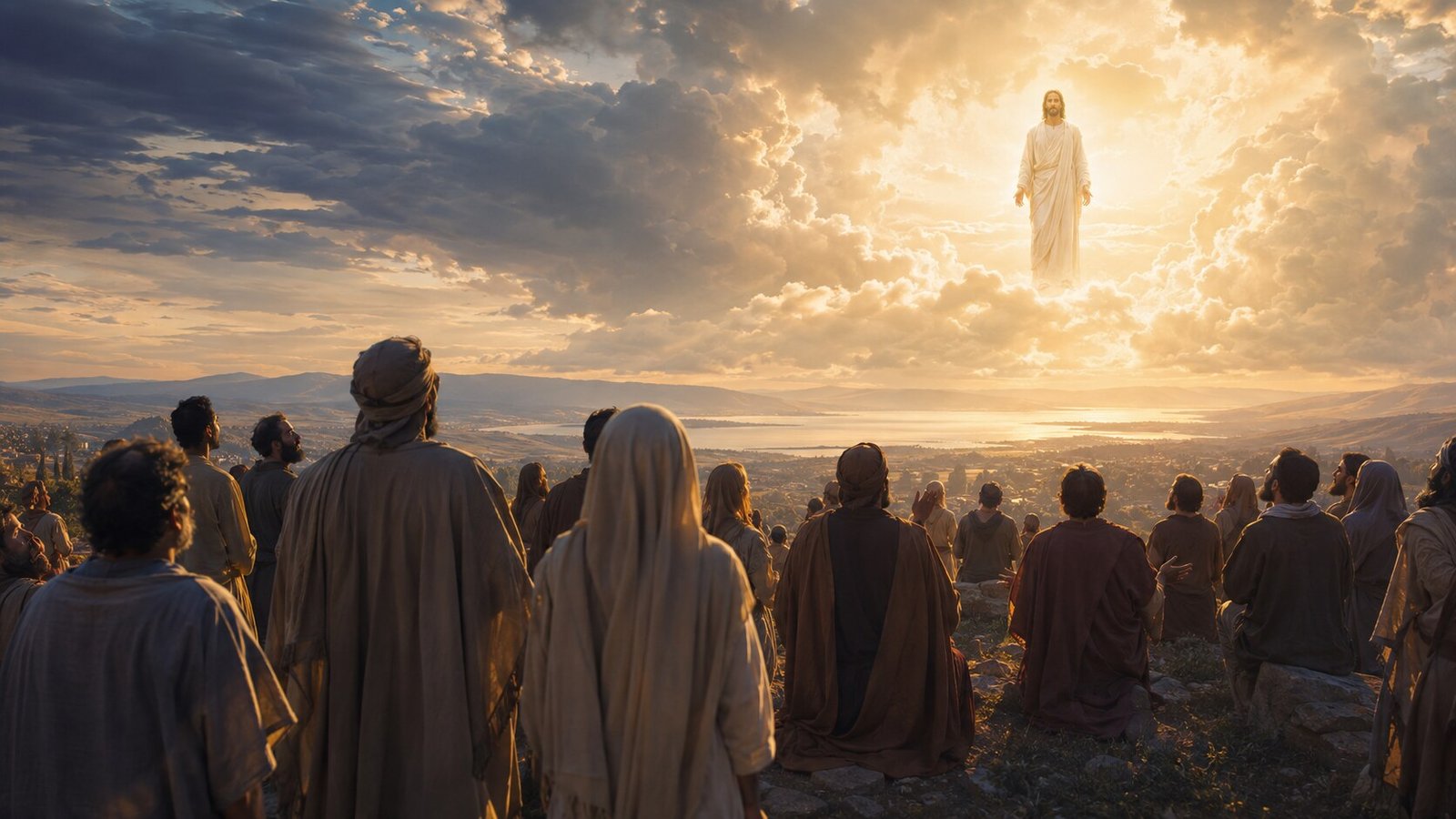
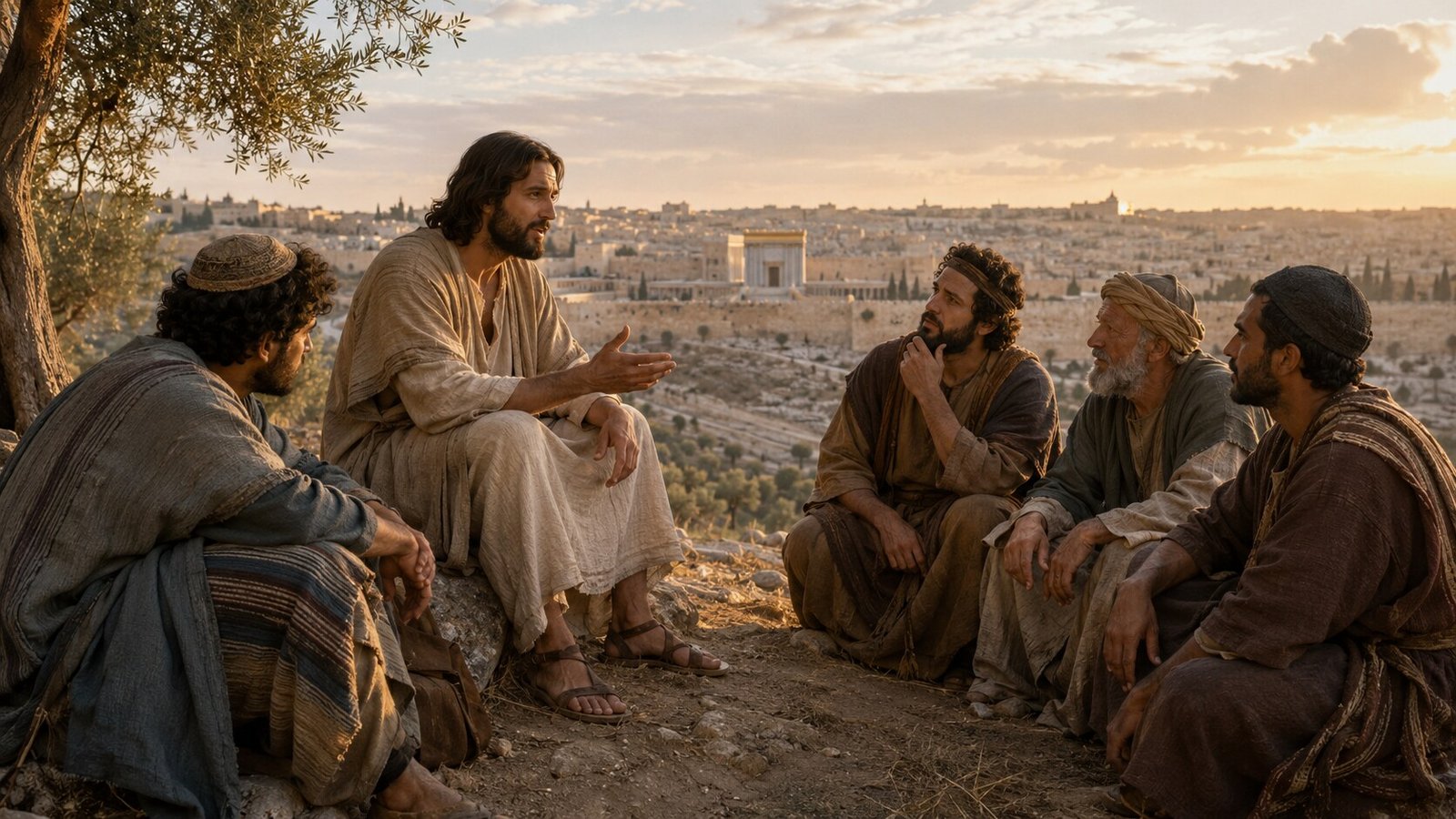
The disciples asked when. Jesus taught them how to wait.
What did Jesus place at the centre of His own prophetic teaching?
Truth before excitement
Steadiness before panic
Mission before speculation
Faithfulness under pressure
Readiness as a way of life
Jesus speaks of Jerusalem's coming destruction and a final horizon of His visible appearing. Faithful readings differ over where one horizon gives way to the other, but neither AD 70 nor the final coming should be erased.
His coming is portrayed as unmistakable, glorious and judicial. Yet He refuses the date His disciples most want. The day and hour remain with the Father, and the uncertainty is transformed into a summons to faithful service.
The parables that follow are Jesus' own application: feed the household, keep the lamp ready, use what the Master entrusted, and love the least. Readiness is moral and relational before it is chronological.
Jesus gives more clarity about how His people must live than about the precise relationship of every event.
Examine the Scripture
Matthew 13; 24–25 · Mark 13 · Luke 12:35–48; 17:20–37; 21 · John 5:19–29; 6:35–54; 14:1–3
05Resurrection, gathering and witness
The apostles waited for the same Jesus.
What did the promised return mean to the first churches?
Witness until He returns.
The ascending Jesus will return; until then, the Spirit sends His people to the nations.
Comfort one another.
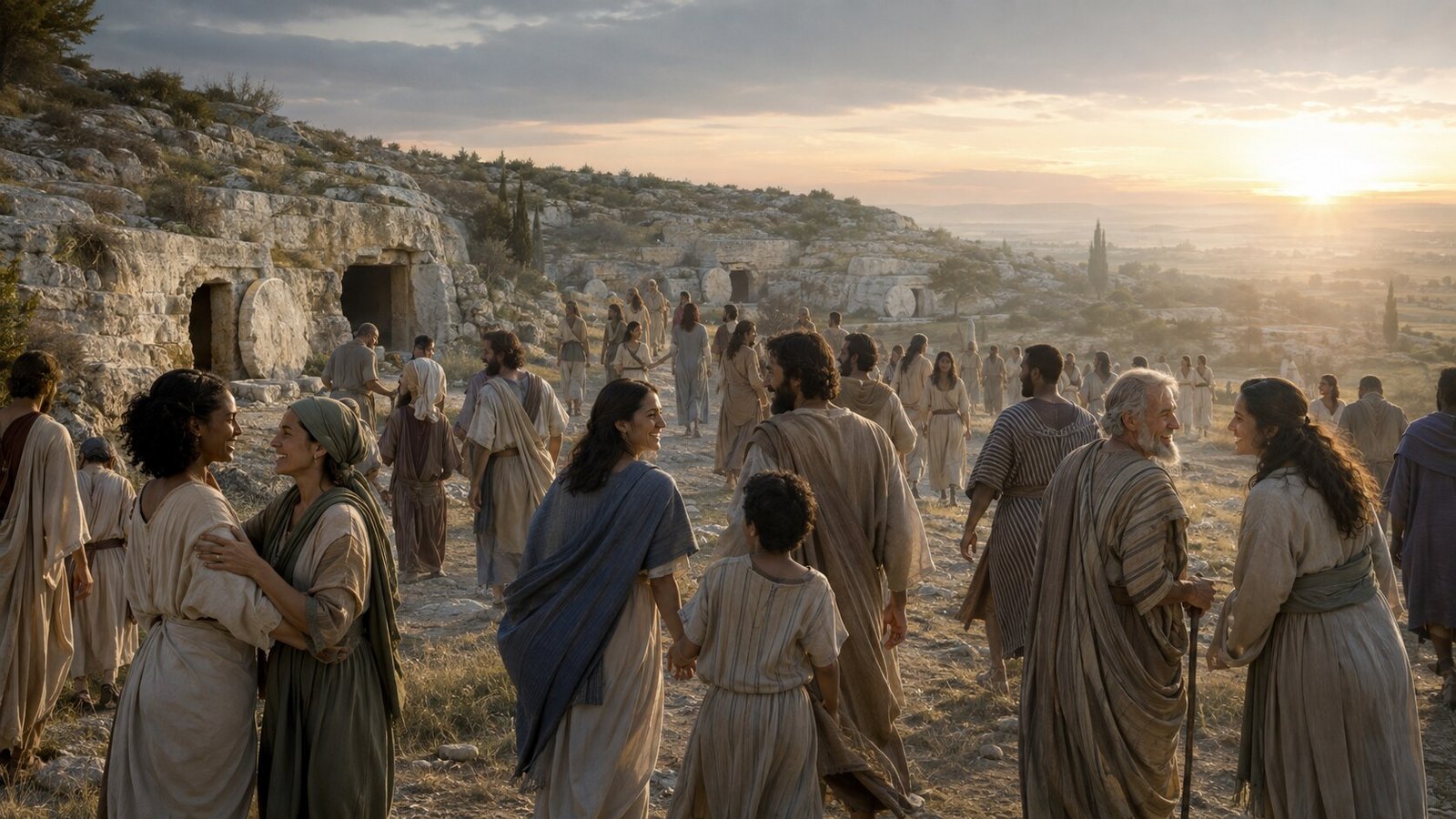
The dead in Christ will rise, the living will be transformed, and believers will always be with the Lord.
Live holy lives.
The Day exposes the temporary order and directs hope toward a world where righteousness dwells.
Purify your hope.
Those who hope to see Christ as He is learn to abide in Him now.
Not escape from embodiment.
The redemption of the body.
Christ is the firstfruits. His people will bear His risen image. Creation itself waits for liberation.
Paul never offers the gathering merely as a diagram. He speaks to grieving believers. The trumpet, resurrection and meeting with the Lord culminate in a pastoral command: comfort one another with these words.
“Last days” language is already present in the apostolic age. The kingdom has begun because the King has come, died, risen and poured out His Spirit. Yet death, rebellion and suffering remain until His appearing.
The waiting church is therefore a witnessing church. Hope in Christ's return does not release disciples from the world. It sends them into it with courage, holiness and good news.
Examine the Scripture
Acts 1:6–11; 2:14–36; 3:17–26 · Romans 8:18–25 · 1 Corinthians 15 · 1 Thessalonians 4:13–5:11 · Titus 2:11–14 · 2 Peter 3 · 1 John 2:28–3:3
06Reading the last book as a whole
The Revelation is first the unveiling of Jesus Christ.
What changes when the Lamb—not the symbols—becomes our starting point?
The risen Christ walks among His people
Heaven rules before conflict unfolds
The slain One alone opens the scroll
Saints conquer by testimony and His blood
The throne of God and the Lamb fills all
Revelation is apocalypse, prophecy and letter. Its symbols unveil spiritual and historical realities; its prophecy calls for obedience; its letter addressed first-century congregations under real pressures.
Its visions are saturated with the Old Testament. A beast is not interpreted responsibly before Daniel. Babylon is not understood before Babel, Isaiah and Jeremiah. The final city cannot be seen fully without Eden, tabernacle, Zion and Ezekiel.
The book contains genuine movement toward victory and new creation, yet also resets, interludes, anticipations and repeated endpoints. A chronological spine with substantial recapitulation best deserves testing; no chart should disguise inference as a verse.
The visions intensify and advance, while several cycles appear to revisit the conflict and its endpoint from different angles.
Examine the Scripture
Revelation 1–3 · 4–5 · 6–11 · 12–14 · 15–18 · 19–20 · 21–22
07Lamb and dragon, witness and empire
The deepest conflict is over worship.
What do the terrifying symbols reveal when Christ remains the centre?
Authority through sacrifice
He conquers by His blood, truthful word and faithful love.
Power through coercion
It demands allegiance, imitates authority and turns economy into worship.
Faithful communion
She is made ready by grace and clothed in righteous faithfulness.
Seduction through luxury
She commodifies bodies, nations and desire until her splendour collapses.
John's letters speak of many antichrists already present. Paul describes a Man of Lawlessness. Revelation portrays beasts from sea and land. These figures may converge in a final opponent, but Scripture does not give permission to invent one seamless biography without argument.
The mark belongs first to the language of worship, allegiance and economic coercion. Technology may serve oppressive power, but the text begins with counterfeit worship—not with a device waiting to be identified in the news.
Revelation's answer to beastly power is not fascination with evil. It is faithful witness. The saints conquer “by the blood of the Lamb and by the word of their testimony,” refusing to preserve life through disloyalty to Christ.
Examine the Scripture
Daniel 7 · 2 Thessalonians 2:1–12 · 1 John 2:18–27; 4:1–6 · Revelation 5; 12–14; 17–19
08Systems beneath the labels
Faithful Christians arrange the visions differently.
Can disagreement be made intelligible without becoming the story?
Futurist — climactic future fulfilment
Partial preterist — strong first-century fulfilment with future return
Historicist — panorama across church history
Idealist — recurring patterns throughout the age
Premillennial — Christ returns before a future millennium
Amillennial — the millennium portrays Christ's present reign
Postmillennial — gospel advance precedes Christ's return
Pre-tribulation — before the final period
Pre-wrath — after persecution, before final wrath
Post-tribulation — at Christ's visible appearing
Jesus will return personally and visibly.
Prophetic visions repeatedly culminate in judgment and kingdom.
Revelation appears to combine progression with recapitulation.
The timing of gathering and the nature of the millennium remain disputed.
These are not one flat list. Futurism and idealism ask where visions refer; millennial positions ask how Revelation 20 relates to Christ's return; gathering views ask when believers meet the Lord.
Each view must explain the passages that press against it. A fair presentation states strengths, weaknesses, first-century relevance, canonical coherence and what each reading must infer.
Full preterism falls outside the project's orthodox boundary where it denies or radically redefines the future bodily return, resurrection and final judgment. Humility does not require uncertainty about what Scripture makes explicit.
Examine the Scripture
Matthew 24:27–31 · Acts 1:9–11 · 1 Thessalonians 4:13–5:11 · 2 Thessalonians 2:1–12 · Revelation 19–20
09Clarity without speculation
The questions people carry.
What can Scripture actually support—and where must we stop?
Is the “rapture” biblical?+
Yes, if the word means the “catching up” described in 1 Thessalonians 4:17. The disputed question is whether this gathering is a separate earlier coming or part of Jesus' visible return. Rejecting a pre-tribulation timetable is not rejecting the biblical gathering.
Who is the Antichrist?+
John speaks of an antichrist spirit and many antichrists already present. Paul describes a Man of Lawlessness, while Revelation presents beasts. A final personal opponent is a strong orthodox synthesis, but Scripture does not explicitly identify a modern leader or equate every term in every detail.
Is the mark of the Beast a technology?+
Revelation explicitly links the mark with worship, allegiance and economic exclusion. The Bible does not name a chip, barcode, currency or medical technology. A technology could serve coercive power, but technological resemblance alone is not fulfilment.
What is Babylon?+
First-century Rome strongly fits much of Revelation 17–18, drawing on the older biblical Babylon tradition. Babylon may also portray transhistorical human empire and a final embodiment of idolatrous economic power. Its moral character is clearer than its final geographic identity.
What is the Millennium?+
Revelation 20 explicitly speaks of a thousand-year reign and a first resurrection. Historic premillennial, dispensational premillennial, amillennial and postmillennial readings differ over timing, location, symbolism and sequence. Each preserves important evidence and must explain difficult details.
Can current events fulfil prophecy?+
They may resemble prophetic patterns, but resemblance is not identification. Wars, technologies and rulers must never be labelled fulfilment without explicit textual criteria. Jesus forbids date-setting and commands readiness.
Trace the disputed passages
Daniel 7–12 · Matthew 24 · 1 Thessalonians 4–5 · 2 Thessalonians 2 · 1 John 2 · Revelation 7; 11; 13; 17–20
10The shared Christian hope
More certain than every timeline.
What can followers of Jesus confess together?
Jesus Christ will personally return.
His appearing will be manifest and glorious.
No human being knows the day or hour.
The dead will be raised bodily.
Living believers will be transformed and gathered to Christ.
Jesus will judge the living and the dead.
Satan, death and every opposing power will be defeated.
The redeemed will come from every people and nation.
God will make all things new and dwell with His people.
Jesus wins.
The slain Lamb is worthy. The risen King returns. The Judge is just. The Bridegroom keeps covenant. The One seated on the throne says, “Behold, I am making all things new.”
Examine the Scripture
John 14:1–3 · Acts 1:9–11; 17:31 · 1 Corinthians 15 · 1 Thessalonians 4:13–18 · 2 Timothy 4:1 · 2 Peter 3:13 · Revelation 1:7; 5; 19–22
11Hope becoming faithfulness
How should we live while we wait?
What kind of people does prophecy intend to form?
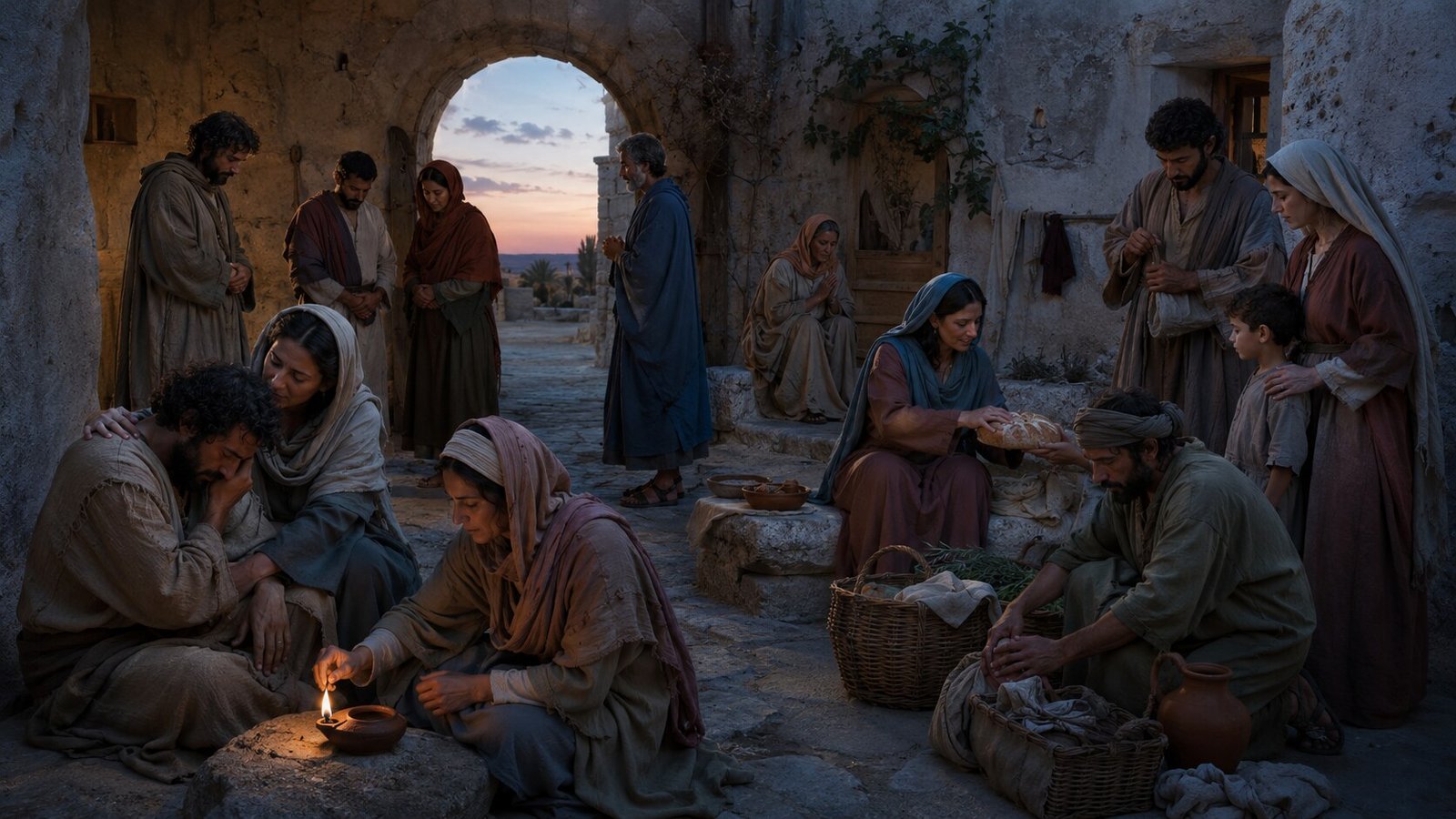
Refuse deception and spiritual sleep.
Give no empire the allegiance that belongs to Jesus.
Carry the gospel to every people.
Hold to Christ when faithfulness costs.
Let future hope reshape present desire.
Grieve with resurrection hope and strengthen one another.
The pre-tribulation believer should be ready to meet Christ at any moment—and prepared to suffer faithfully if a timing assumption is wrong. Hope in rescue must never become complacency.
The pre-wrath or post-tribulation believer should be ready to endure without idolizing suffering. Expectation of hardship must never become fear, survivalism or spiritual pride.
Every believer should live the same essential life: loving Christ, serving the household, resisting deception, proclaiming the gospel and keeping the lamp of faith burning.
The reader who can identify every beast but has ceased to love, witness and remain faithful has missed the purpose of the vision.
Examine the Scripture
Matthew 24:42–25:46 · Romans 13:11–14 · 1 Thessalonians 5:1–11 · Hebrews 10:19–39 · 2 Peter 3:11–14 · Revelation 2–3; 12:11; 13:10; 14:12
12The end is a beginning
The long pilgrimage ends in the presence of God.
What does it mean to be finally Home?

Creation healed
The final enemy defeated
God Himself is light
They will see His face
The holy city is also a bride and a garden. The imagery gathers the whole biblical story: covenant love, Eden restored, the nations healed, the throne at the centre and God's servants reigning in His light.
There is no temple in the city because God and the Lamb are its temple. Sacred presence no longer occupies one guarded room. The dwelling place of God is with humanity, and nothing unclean will rupture communion again.
This is the final Christian hope: not merely surviving catastrophe, solving chronology or even living forever. It is seeing the face of the One who loved us and gave Himself for us.
Examine the Scripture
Isaiah 25:6–9; 35; 60–66 · Ezekiel 47:1–12 · Romans 8:18–25 · 1 Corinthians 15:20–28, 50–58 · Revelation 19:6–9; 21–22